In a historic step reflecting the royal commitment to safeguarding national heritage, the Kingdom of Morocco submitted its nomination file for the Moroccan kaftan to be inscribed on UNESCO's Representative List of Intangible Cultural Heritage. This landmark initiative is part of a comprehensive national strategy to protect authentic Moroccan cultural heritage and counter attempts at cultural appropriation that have targeted Moroccan symbols over the years.
The Moroccan file, submitted by the Ministry of Culture, is based on rigorous academic research and in-depth anthropological studies prepared by a distinguished team of Moroccan experts and historians. The nomination memorandum includes compelling evidence documenting the evolution of the Moroccan kaftan through the centuries, from Amazigh civilization through Islamic and Andalusian periods to the modern elegance that has made it a timeless artistic piece.
What distinguishes this file is its emphasis on the pivotal role of the traditional craftsman, the "Maalem," in preserving the artisanal skills associated with the kaftan. Techniques such as "Sfifa," "Akkad," and hand embroidery represent a unique knowledge heritage passed down through generations with integrity and mastery. Morocco has successfully transformed the kaftan from a traditional garment into a global ambassador of Moroccan elegance, blending authenticity with sophistication.
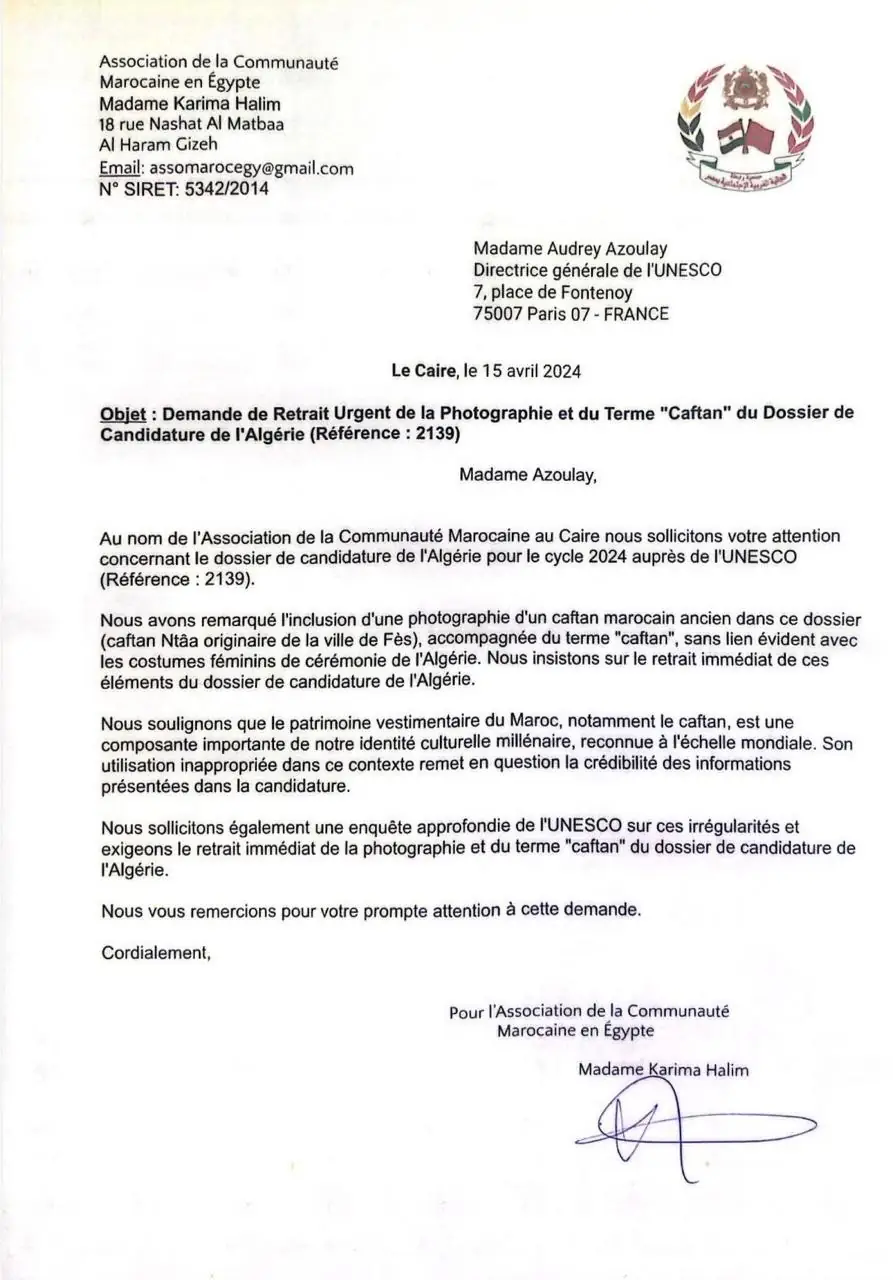
This diplomatic and cultural battle at UNESCO comes at a time when attempts to appropriate the intangible heritage of peoples are increasing on the international stage. It comes as no surprise that Moroccan symbols have been targeted, given their richness, diversity, and influence on the global cultural scene. Moroccan diplomacy, under high royal guidance, has demonstrated a remarkable ability to defend national heritage and establish its historical and civilizational reference.
The inscription of the Moroccan kaftan in UNESCO will constitute new international recognition of this national attire's symbolism and the uniqueness of Moroccan civilization. This achievement will represent a victory for the traditional craftsman and for Moroccan women, who have remained throughout the ages the faithful guardians of this heritage, transforming it into a vibrant work of art and an enduring icon of Moroccan beauty and dignity.